Air Force PT Standards by Age Group: Complete Breakdown
DAFMAN 36-2905 sets different Air Force PT standards for each of 9 age groups. Here are the actual minimums and max thresholds for push-ups, sit-ups, and the 1.5-mile run.
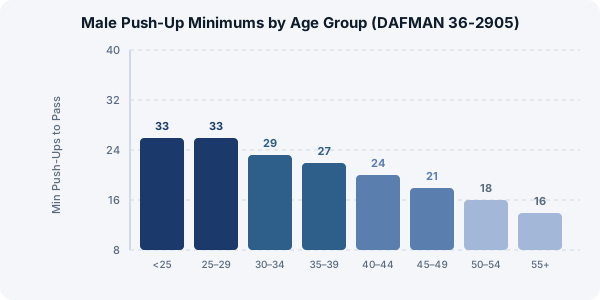
Your Air Force PT score isn't graded on the same scale at 24 as it is at 44. DAFMAN 36-2905 establishes age-adjusted standards across 9 brackets, and the minimums get more lenient as age increases, but the Excellent threshold shifts too.
Understanding your specific age group's standards isn't just useful for test day. It tells you exactly what numbers to train toward, what separates a 15-point push-up score from a 20-point one, and when you cross from one bracket into a more forgiving tier.
The 9 Age Groups
DAFMAN 36-2905 divides Airmen into the following age brackets for scoring purposes:
- Under 25
- 25–29
- 30–34
- 35–39
- 40–44
- 45–49
- 50–54
- 55–59
- 60 and over
Your age on the day of the test determines which bracket applies. A 30-year-old who tests one day before their 31st birthday is still scored in the 30–34 bracket.
Why Age Brackets Exist
Physiological fitness capacity changes measurably across a 20-year career. VO2 max naturally declines at approximately 1% per year after age 25 in sedentary individuals, though active people slow that decline considerably. Muscle mass and recovery capacity also shift.
The Air Force's age-adjusted standards aren't lowering the bar. They're acknowledging that a 50-year-old Master Sergeant who runs 14:00 is demonstrating the same relative fitness level as a 25-year-old Airman Basic who runs 11:30. Both are operating near their age-appropriate ceiling.
What doesn't change with age: the composite minimum (75), the rating thresholds (Excellent ≥90, Satisfactory 75–89), and the component minimum rule. Every Airman, regardless of age, must meet all component minimums to pass.
Male Standards by Age Group
Below are approximate minimum thresholds (earning a score just above zero component points) and the performance required to max each component. These figures are drawn from DAFMAN 36-2905 scoring tables.
Push-Ups: Male Minimums and Maximums
| Age Group | Minimum Reps | Max Reps (20 pts) |
|---|---|---|
| Under 25 | 33 | 54 |
| 25–29 | 33 | 51 |
| 30–34 | 28 | 45 |
| 35–39 | 24 | 39 |
| 40–44 | 18 | 33 |
| 45–49 | 10 | 27 |
| 50–54 | 10 | 21 |
| 55–59 | 10 | 18 |
| 60+ | 10 | 16 |
Sit-Ups: Male Minimums and Maximums
| Age Group | Minimum Reps | Max Reps (20 pts) |
|---|---|---|
| Under 25 | 42 | 58 |
| 25–29 | 38 | 54 |
| 30–34 | 34 | 50 |
| 35–39 | 28 | 44 |
| 40–44 | 24 | 40 |
| 45–49 | 20 | 36 |
| 50–54 | 18 | 30 |
| 55–59 | 14 | 26 |
| 60+ | 10 | 22 |
1.5-Mile Run: Male Minimums and Best Times (60 pts)
| Age Group | Minimum (slowest passing) | Max Score Time |
|---|---|---|
| Under 25 | 16:00 | 9:12 |
| 25–29 | 16:00 | 9:12 |
| 30–34 | 16:30 | 9:30 |
| 35–39 | 17:00 | 9:45 |
| 40–44 | 17:30 | 10:00 |
| 45–49 | 18:00 | 10:30 |
| 50–54 | 18:30 | 11:00 |
| 55–59 | 19:00 | 11:30 |
| 60+ | 19:30 | 12:00 |
Female Standards by Age Group
Push-Ups: Female Minimums and Maximums
| Age Group | Minimum Reps | Max Reps (20 pts) |
|---|---|---|
| Under 25 | 18 | 40 |
| 25–29 | 18 | 38 |
| 30–34 | 14 | 32 |
| 35–39 | 14 | 28 |
| 40–44 | 10 | 24 |
| 45–49 | 10 | 20 |
| 50–54 | 6 | 16 |
| 55–59 | 6 | 14 |
| 60+ | 4 | 12 |
Sit-Ups: Female Minimums and Maximums
| Age Group | Minimum Reps | Max Reps (20 pts) |
|---|---|---|
| Under 25 | 38 | 54 |
| 25–29 | 32 | 50 |
| 30–34 | 28 | 46 |
| 35–39 | 24 | 40 |
| 40–44 | 20 | 34 |
| 45–49 | 14 | 28 |
| 50–54 | 10 | 24 |
| 55–59 | 10 | 20 |
| 60+ | 6 | 18 |
1.5-Mile Run: Female Minimums and Best Times (60 pts)
| Age Group | Minimum (slowest passing) | Max Score Time |
|---|---|---|
| Under 25 | 18:30 | 11:57 |
| 25–29 | 18:30 | 11:57 |
| 30–34 | 19:00 | 12:30 |
| 35–39 | 19:30 | 12:45 |
| 40–44 | 20:00 | 13:15 |
| 45–49 | 20:30 | 13:45 |
| 50–54 | 21:00 | 14:15 |
| 55–59 | 21:30 | 14:45 |
| 60+ | 22:00 | 15:15 |
How Standards Change With Age: A Side-by-Side Comparison
To make the differences concrete, compare a 27-year-old male and a 52-year-old male both aiming for an Excellent score (90+).
27-year-old male (25–29 bracket):
- Needs ~50 push-ups to get close to 20 pts
- Needs ~50 sit-ups to get close to 20 pts
- Needs roughly a 10:00 run for maximum run points
- To hit 90 composite: approximately a 12:00 run gets about 56 pts, needs ~17 pts from each calisthenics component
52-year-old male (50–54 bracket):
- Needs ~20 push-ups to reach max push-up score
- Needs ~28 sit-ups to reach max sit-up score
- Needs roughly an 11:00 run for max run points
- Same 90-point threshold applies, but he reaches it at different absolute performance levels
Both men need 90 points. The 52-year-old needs fewer absolute reps and a slower run time. But the scoring tables are calibrated so that reaching those thresholds at 52 reflects the same relative fitness effort as reaching the harder thresholds at 27.
When You Cross Into a New Age Bracket
Crossing an age bracket boundary can produce a sudden shift in your score without any change in your fitness. An Airman who scores 84 at age 39 might score 89 at age 40 with identical performance, because the 40–44 scoring tables have lower performance requirements for the same point values.
This isn't a windfall to rely on. The composite minimum is still 75, the component minimums still apply, and the new bracket's standards still require serious fitness. But it's worth knowing when you're approaching a boundary, especially if you're close to a rating threshold.
Use the Air Force fitness assessment tool to enter your performance and age group and see exactly how many points you're earning under your current bracket's tables.
Component Minimums Are Non-Negotiable at Every Age
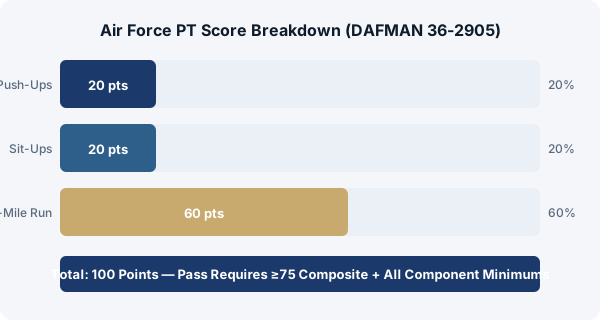
Regardless of your age group, failing a component minimum is an automatic Unsatisfactory. A 58-year-old male who does only 9 push-ups fails, even though his bracket's minimum is 10. There's no exception for "almost made it."
The minimums represent the floor, not the target. If you're training to just clear the minimum in any component, you're one off day away from a failed test.
For a deeper look at how the scoring system works, including how component points add up to your composite, see the Air Force PT scoring breakdown. And to see how your current numbers stack up under your specific age group's tables, the assessment score calculator runs the math automatically, along with noting our scoring methodology.